Furnace Repair in Portsmouth, NH
Portsmouth is a coastal city on the Piscataqua River in Rockingham County, a historic seaport where Market Square anchors a walkable downtown, Strawbery Banke preserves the city's earliest neighborhood, and Prescott Park opens toward the harbor. The housing here is among the oldest in the state, with colonial and Federal era homes in the South End, brick commercial buildings downtown, and a mix of older residential streets, apartments, and newer neighborhoods beyond the center. That history makes Portsmouth heating unlike anywhere else in New Hampshire: furnaces serve buildings shaped by centuries of seaport life, adapted repeatedly as fuels, families, and uses changed.
Serving Portsmouth, NH 03801
Coastal winters in Portsmouth bring long cold months with a maritime edge: damp air, wind off the harbor, and freeze and thaw cycles that work on heating equipment, ductwork, and venting. Salt air ages outdoor and venting components faster than inland air does, basements near the water table run damp, and older homes lose heat through original windows, modest insulation, and the many additions that centuries of ownership have produced. Heating oil, natural gas, and propane all serve Portsmouth homes, and the fuel at a given address often reflects the era the home was built and the street it stands on.
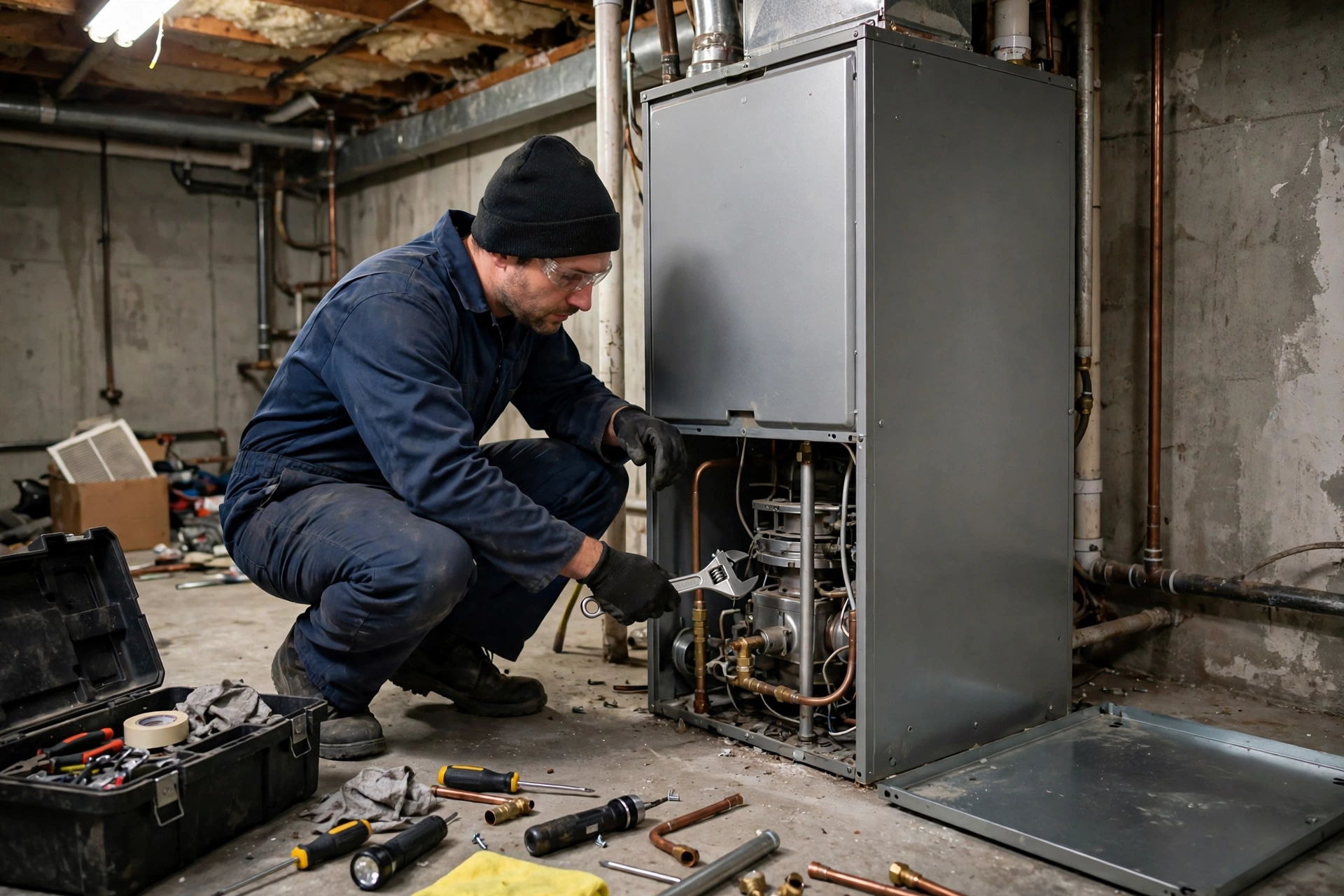
Granite State Furnace Pros serves Portsmouth with furnace repair, replacement, and maintenance, approaching each home as a piece of the city's living history rather than a generic job. Technicians review the furnace, the ductwork, the venting, and the rooms that stay cold, then explain the options plainly, whether the answer is a repair, a maintenance plan, or a replacement fitted to the building as it stands. From Market Square to the South End, the goal is safe, steady warmth through the coastal winter without compromising the character of the home.
South End Colonial Homes and Strawbery Banke Area Heating
The South End and the Strawbery Banke area hold Portsmouth's earliest residential streets, where colonial and Federal era homes stand close together on narrow lanes near the harbor. These houses carry extraordinary character: small rooms, low ceilings in places, original woodwork, and layouts shaped by centuries of family life, and they carry heating challenges to match. Furnaces in these homes often serve layouts that were never drawn for forced air, with ductwork threaded through tight spaces and additions that pull heat unevenly, so some rooms warm readily while others, especially harbor facing rooms exposed to wind, lag behind.
Service for South End homes begins with respect for the building and a careful look at what actually drives discomfort. Drafts through older windows and doors, heat loss from exposed walls, duct paths that cannot be rerouted, and thermostats placed where harbor wind or sun distorts readings all play a part. A technician who maps those factors before recommending equipment can often improve comfort through balancing, duct attention, and maintenance, and when replacement is needed, sizing and venting must be fitted to the building's realities rather than to a standard template.
- Colonial and Federal era homes on narrow South End lanes
- Harbor facing rooms exposed to wind and heat loss
- Duct paths threaded through tight historic spaces
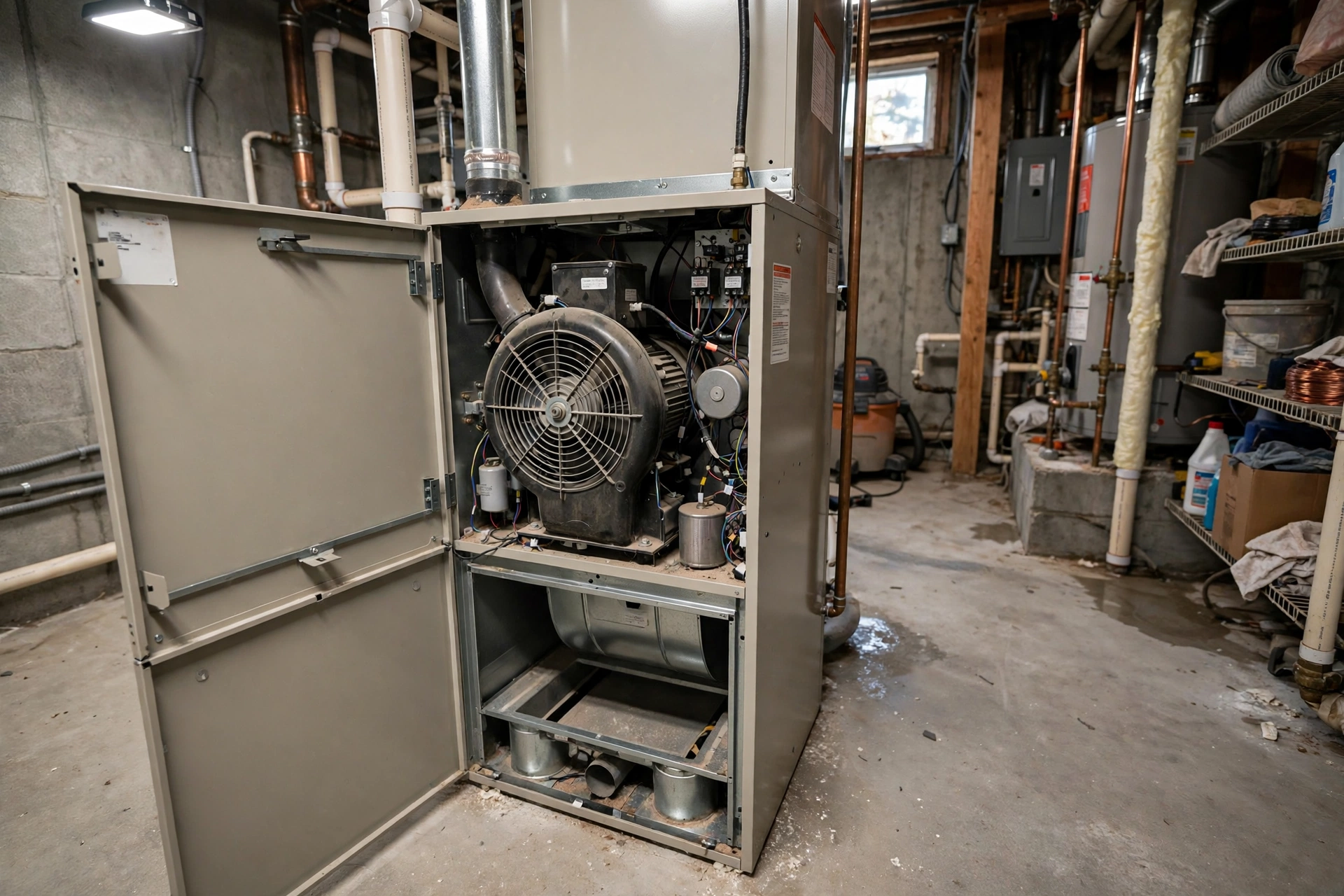
Downtown Portsmouth Apartments and Brick Buildings
Downtown Portsmouth, centered on Market Square, holds brick commercial buildings, apartments, and mixed use properties that serve residents, workers, and visitors to the seaport. Heating these buildings means serving varied spaces under one roof: street level shops, upper floor apartments, and offices with different hours and different comfort needs. A furnace in a downtown building may heat a single apartment, a whole floor, or a shared system, and the comfort complaints that reach a technician often trace back to shared walls, varied occupancy, and ductwork that was adapted as the building's uses changed over time.
The downtown setting also means furnace access can be tight, with basement mechanical rooms shared with storage, parking, or other building systems, and with venting paths that run through old masonry. Maintenance visits for downtown properties check ignition, safety controls, and airflow, and flag venting or clearance concerns while there is time to address them. Clear communication matters here too, since owners, tenants, and property managers may all have a stake in the same system, and a plain explanation of what was found and what comes next keeps everyone aligned.
- Brick buildings and apartments around Market Square
- Mixed uses with different hours and comfort needs under one roof
- Tight mechanical rooms and venting through old masonry
Salt Air, Damp Basements, and Coastal Furnace Wear
Coastal air is the quiet adversary of Portsmouth heating equipment. Salt in the air accelerates corrosion on venting components, outdoor parts, and exposed metal, while dampness in basements near the water table works on ductwork, seals, and furnace cabinets over time. A furnace that would age gracefully inland may therefore show venting wear, rust, or seal deterioration earlier in Portsmouth, and maintenance visits here pay special attention to those coastal effects: vent condition, condensate handling, cabinet and duct seals, and any sign that moisture is reaching components it should not.
Homeowners can help by keeping basement areas around the furnace dry and clear, noting any musty smells or visible moisture near ductwork, and mentioning venting concerns at each visit. Between visits, filter changes remain the most useful habit, since coastal dust and salt residue add to the load a filter must carry. A furnace maintained with coastal wear in mind lasts longer, runs more safely, and gives clearer warning when venting or component replacement should join the maintenance plan.
- Salt air accelerating corrosion on vents and exposed metal
- Damp basements affecting ductwork, seals, and cabinets
- Vent and condensate checks as a routine part of coastal maintenance
Portsmouth Furnace Failures During Harbor Winter Weather
Portsmouth furnace failures arrive with the same seasonal logic as the rest of the Seacoast: sustained cold and harbor wind push systems to run for hours, and marginal parts fail under that load. Warning signs usually come first, including short cycling, a burner slow to light, new blower noises, or a home that warms more slowly than it did the previous winter. Acting on those signs before the next cold and windy stretch often means a simpler repair and a calmer schedule than waiting for a no heat night when harbor wind is driving cold through every draft in the house.
If heat stops, the safe first checks apply in Portsmouth as anywhere: thermostat set to heat and above room temperature, breaker not tripped, oil tank not empty, and filter not clogged. Those steps rule out simple causes quickly. If heat does not return, or if fuel smells, smoke, or burning odors appear, the system should stay off until inspected. Noting which rooms cooled first, especially windward rooms, and any new sounds helps a technician diagnose faster, which matters on nights when coastal wind makes every hour without heat feel longer.
- Harbor wind and sustained cold pushing systems to long running hours
- Warning signs include short cycling, slow lighting, and slow warm ups
- Windward rooms often cool first and help pinpoint airflow problems
Fitting a New Furnace to a Historic Portsmouth Building
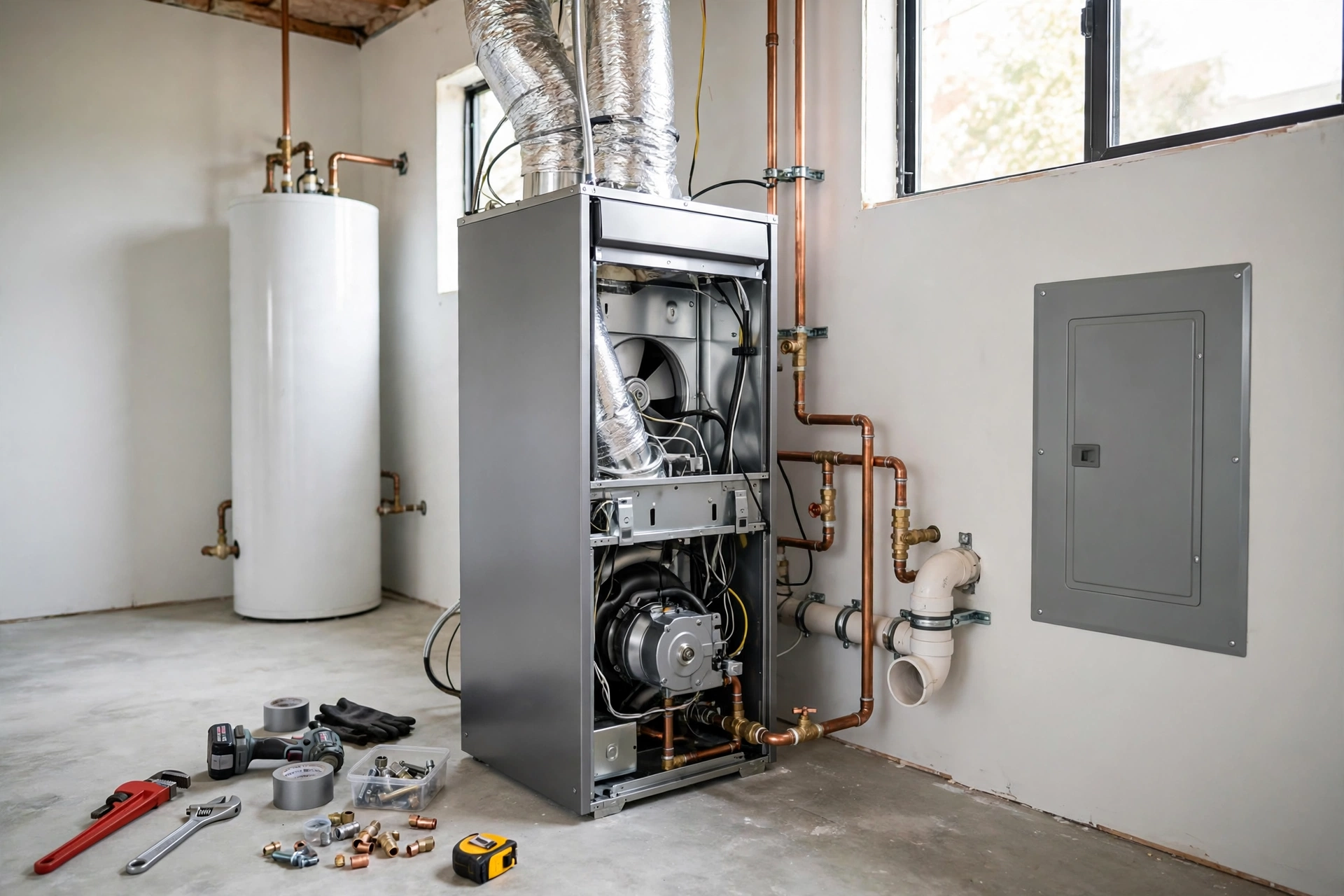
Replacing a furnace in a historic Portsmouth building is a fitting exercise as much as an equipment choice. Venting must suit old masonry and chimney paths, ductwork must work within spaces that cannot be rebuilt, and sizing must reflect the building as it stands, with its additions, its insulation limits, and its wind exposure. A technician should walk the home, review venting and duct condition, discuss fuel options at the property, and explain how each choice affects both comfort and the building itself, because a replacement that ignores the building will disappoint no matter how capable the new unit is.
Timing and planning help as much as technical care. A replacement arranged in mild weather allows time to address venting or duct work alongside the installation and to schedule around tenants or household routines. Homeowners with aging Portsmouth furnaces can start that conversation at a maintenance visit, even while the old unit still runs, so the plan, the fuel strategy, and the sizing approach are ready when retirement day arrives. The result is a system that respects the building and warms it evenly through coastal winters to come.
- Venting fitted to old masonry and chimney paths
- Sizing to the building as it stands, including wind exposure
- Mild weather planning for duct and vent work alongside installation
Portsmouth Neighborhoods From the Harbor to the City Edge
Portsmouth furnace service runs from Market Square and the South End through the downtown brick district and the residential streets beyond, toward the Pease Tradeport area and the newer neighborhoods near the city's edges, with Interstate 95 and Route 1 linking the city to the wider Seacoast. Each part of the city heats differently: harbor facing historic homes battle wind and damp, downtown apartments balance shared systems and varied uses, and newer edge neighborhoods face the more familiar suburban pattern of long duct runs and finished spaces. Local knowledge of those patterns helps a technician arrive with the right questions already in mind.
Portsmouth households are equally varied, from year round families and downtown workers to seasonal residents and harbor related businesses, and heating patterns follow that variety. Some homes run heat constantly, others sit quiet for stretches, and both deserve a furnace maintained for its actual use. Clear diagnosis, maintenance timed before winter, and honest repair versus replacement guidance keep Portsmouth homes warm through a coastal season that tests old buildings and new systems alike.
- Market Square, the South End, and the Strawbery Banke area
- Downtown brick district apartments and mixed use buildings
- Newer neighborhoods toward the Pease Tradeport area and city edge
Portsmouth Furnace Tune Ups Against Coastal Wear
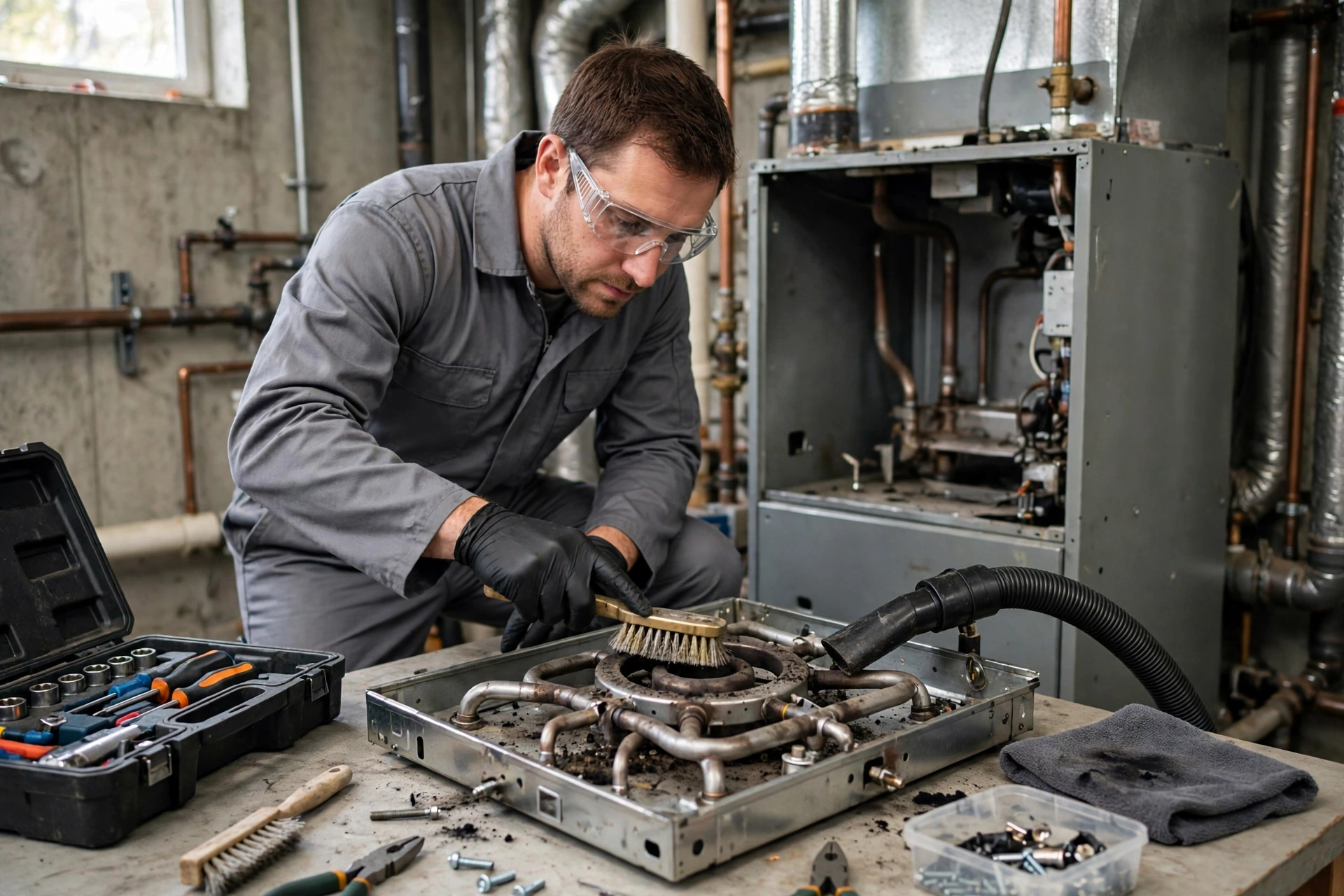
A furnace tune up in Portsmouth is shaped by the harbor, since salt air, damp basements, and wind exposure age heating equipment faster than inland conditions do. The visit cleans and inspects burner and ignition components and tests safety controls, but it also gives venting condition, condensate handling, and duct seals special attention, because salt corrosion on vents and exposed metal, along with moisture reaching ductwork, are the coastal wear patterns that shorten equipment life when ignored. In South End colonial homes, the technician reviews duct paths threaded through tight historic spaces and checks harbor facing rooms that lose heat to wind, while in downtown brick buildings the review covers shared systems, tight mechanical rooms, and venting through old masonry.
Portsmouth homeowners can strengthen the visit by reporting coastal signs early: musty smells near ducts, visible moisture in basements, rust or discoloration on vent components, and rooms that cool fastest on windy nights. Filter changes deserve particular regularity here, since coastal dust and salt residue load filters heavily through the heating season, and a clogged filter under sustained load can trip safety limits. Keeping basement areas around the furnace dry and clear, and keeping vents free of debris and snow, gives the system the breathing room it needs when harbor wind drives cold through every draft in the house.
Across winters, Portsmouth tune up records track coastal wear in a way that single visits cannot, showing how vents, seals, and components have aged and when venting or component replacement should join the maintenance plan. That history is invaluable when an aging furnace in a historic building approaches replacement, because the new system must be fitted to old masonry venting, tight duct spaces, and wind exposure, not simply swapped into place. A yearly preseason visit, kept faithfully, is how Portsmouth homes preserve both their historic character and their winter safety, season after coastal season.
Portsmouth homeowners sometimes question whether a yearly tune up is needed for a furnace that heats without complaint, and coastal conditions answer that question firmly. Salt air works on vents and exposed metal whether the furnace runs well or not, damp basements loosen duct seals over time, and harbor wind exposes heat loss that calm weather conceals. A visit that catches a corroded vent, a failing seal, or a weakening igniter lets the household repair the problem in mild weather, with time to order parts and schedule around tenants or family routines. Skipping the visit does not stop coastal wear; it only delays the discovery until a cold and windy night, when the house cools quickly, the repair becomes urgent, and the technician must work against the weather as well as the fault. For owners of South End historic homes in particular, that yearly check protects both comfort and the building itself.
- Salt corrosion on vents and exposed metal inspected every visit
- Damp basement and duct seal effects checked alongside standard service
- Coastal wear tracked across years to plan venting and replacement work
Furnace Questions in Portsmouth?
Tell us what your furnace is doing and where you are, and we will help arrange the next step.
How much does furnace replacement in Portsmouth cost?
Replacement pricing varies with the unit size and fuel type, venting and duct work the historic building requires, and installation complexity. A home review comes first, with the factors behind the recommendation explained before any work is scheduled.
Does salt air really damage furnaces in Portsmouth?
Yes, salt air accelerates corrosion on venting and exposed metal components, and dampness affects duct seals and cabinets. Coastal maintenance visits check those items specifically so wear is caught early.
Do you service colonial homes in the South End?
Yes, South End colonial and Federal era homes are a core part of Portsmouth service, including airflow balancing for tight historic layouts and harbor facing rooms.
Why are harbor facing rooms colder in my Portsmouth home?
Wind exposure, older windows, and duct layout often combine to leave windward rooms cold. An airflow and building review can show how much of the problem is duct balance and how much is heat loss through the envelope.
When should I schedule furnace maintenance in Portsmouth?
Before the sustained cold and harbor wind season is ideal, so venting, ignition, and safety checks are complete while repairs can still be handled calmly.
What should I do if my Portsmouth furnace smells like fuel?
Leave the system off, avoid open flames and switches near the smell, ventilate if it is safe to do so, and arrange for a technician to inspect the fuel delivery system before the furnace runs again.
Furnace Questions in Portsmouth, Answered
Not seeing your question? Request service and tell us what your furnace is doing.
Call (855) 625-1748